13 Life Factors That Fuel Your Everyday Success


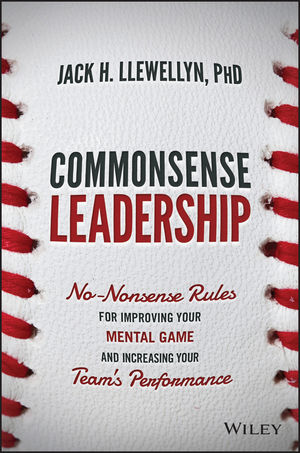
Jack H. Llewellyn, PhD is a sports psychology consultant who has helped a major league baseball pitcher become a Cy Young Award winner, A NASCAR driver go from number six overall to number one and with the Winston Cup Series Championship, and countless leaders at Fortune 500 companies. Now, he’s written the book, Commonsense Leadership: No-Nonsense Rules for Improving Your MentalGame and Increasing Your Team’s Performance.

This is an excellent book for leaders at any stage in their leadership career. It’s a results-driven guidebook that teaches you how to recover quickly from adversity, thrive on stress, preform on the emotional edge, and create a motivating environment (instead of trying to motivate people).

My favorite chapter is the one titled, Winning versus Surviving. In it, Llewellyn outlines the life factors that can fuel your everyday success. Some of those factors include:

No. 1 – Winners expect to win every day. Your plan as a leader should be based on what you expect to gain instead of what you expect to avoid. “The attitude of expecting to achieve something every day puts the probability of success on your side for whatever you may be trying to accomplish,” explains Llewellyn.

No. 2 – Winners have a positive mental attitude. “In practice, this means you may have to back up on occasion and accomplish smaller, separate tasks to regain a positive attitude. Don’t get bogged down by not being able to perform something that is very complex” says Llewellyn.

No. 3 – Leaders play every day at as high an emotional level as they can control.

No. 4 – Leaders strive on stress. Stress can be a wonderful thing if you control the stressors according to Llewellyn. “We make stress negative through our reactions to it,” adds Llewellyn. “The key is to focus your energy, which has traditionally been spent on battling stress, on using stress as an incentive to become better.”

No. 5 – Leaders have specific goals. Winners always know exactly what they want to achieve within a specific time frame.

No. 6 – Leaders realize the importance of teamwork. It’s important that every player know his or her role on the team and be able to execute it.

No. 7 – Leaders communicate with team members, not to team members. Your verbal and nonverbal means of communicating must be used in a very positive and constructive way so that every contact is truly a conversation.

No. 8 – In winning environments, leadership is tolerant of mistakes made while trying to succeed.

No. 9 – Leaders must provide players with a winning environment.

No. 10 – Leaders hold their focus and can change it quickly. No environment—no plan—is perfect, so there must be a plan B.

No. 11 – When focus is lost, winners can recover quickly, and leaders are able to help their team do the same. 

No. 12 – Leaders have balance. Consistent leaders recognize the importance of fulfillment, both personally and professionally, and they evaluate balance in terms of quality, not quantity, or time spent.

No. 13 – Leaders are totally committed to winning; in other words. They have a burning desire to do so.

Comments

Popular posts from this blog

Business And Life Lessons From Entrepreneur Miguel Leal

What I like most about Miguel Leal ’s memoir, aside from its overall compelling and inspiring information, are the business and life lessons he shares.  Those lessons are found throughout his recently released memoir, The House That Cheese Built . The book is a quintessential American dream story from a Mexican entrepreneur who shares the tale of building a multi-million-dollar business from scratch, complete with both success and failure, and always a vision of hope.  Leal came to the U.S. penniless as a teenager, speaking almost no English; he literally slept in the boiler room of a Wisconsin cheese factory for months before he was caught. Through hard work, grit, and ingenuity Leal would go on to launch his own business. He is widely credited with introducing Mexican cheeses to the U.S. market and grew his company to a multimillion-dollar success story that defined an industry. Yet, like many successful entrepreneurs, Leal’s great successes were matched by a variety of ...

Twenty-five Of My Favorite Leadership Quotes

All year during 2012, I collected my favorite quotes about leadership from Twitter. When the year ended, I published the list. So, for today's leadership flashback , among the thousands of tweets and retweets on Twitter about leadership during 2012 these 25 were my favorites. A mix of advice from some unknown individuals along with many from leadership book authors and famous leadership experts, and a few from past U.S. presidents and current-day athletes. Great leaders know the power of asking questions. Lead with your heart, not just your head. Learn to let go of fear and embrace the unknown. People are much more impressed by your potential than by your track record. Smart leaders use the power of stories whenever they have important messages to convey. To be effective, leaders have to close the conversational gap with their employees. One of the tests of leadership is the ability to recognize a problem before it becomes an emergency -- Arnold Glasow Managers...

Coach Campbell's Leadership Principles And Winning Approach

Trillion Dollar Coach  is about  Bill Campbell , someone you likely never heard of, who coached several of the biggest names in Silicon Valley during a 16-year tenure, and who’s behind-the-scene wisdom helped created over a trillion dollars in market value. Authored by  Eric Schmidt ,  Jonathan Rosenberg , and  Alan Eagle , they share that from Steve Jobs and Dick Costolo to Larry Page and Sundar Pichai, these big names in Silicon Valley give credit to Campbell for much of their success. Campbell, who died in 2016, started his career as a football coach at Boston College and Columbia then switched to business in 1979. As leaders at Google for more than a decade, Schmidt, Rosenberg, and Eagle had the benefit of experiencing Campbell’s executive coaching firsthand. In addition, for the book, the authors interviewed over 80 people with whom Campbell also worked. Through stories from those interviews, Trillion Dollar Coach features specific strategies and action ste...

The Five Critical Roles You Need To Build A Winning Team

  The new book, Team Players , by leadership expert and New York Times bestselling author, Mark Murphy , explains why a team needs more than strong leaders—it needs the right mix of five roles and talents to succeed.   In addition, Murphy reveals that the secret to extraordinary teams isn’t making everyone the same—it’s embracing and leveraging fundamental differences through those five distinct team roles. No amount of teambuilding, trust, or cohesion can overcome having the wrong mix of people in the room.   The five essential roles and talents are:   The Director assumes a leadership role within the team, guiding its direction and making important, difficult, and even unpopular decisions.   The Achiever immerses themselves in the details of accomplishing tasks and getting things done, with a keen eye for delivering error-free work.   The Stabilizer keeps the team on track with meticulous planning, processes and procedures, clear timelines, and organi...

The Phoenix Encounter Method For Leaders

“All businesses sooner or later face the need to reconstruct their future,” explain the authors of the new book, The Phoenix Encounter Method . “They will need to destroy part or all of the incumbent business model in order to build their breakthrough, future-ready organization.” Therefore, this book shares a new method of leadership thinking – the Phoenix Encounter – relevant to all organizations in today’s ever-changing environment. Readers will learn how to proactively bridge the gap between perceiving a threat and doing something about it. Written by three INSEAD professors ( Ian C. Woodward , V. “Paddy” Padmanabhan , Sameer Hasija ) and Rum Charan , you’ll learn the steps needed to create a wider range of options to: Defend your organization Fortify its core business Build specific renewal initiatives The steps are grounded in transformation that includes these three elements : The Phoenix Attitude : a set of mindsets, habits, and behaviors that allows a leader to ...

How To Find Your Balance Point

A few years ago,  Brian Tracy , along with  Christina Stein , published,  Find Your Balance Point . "The desire for peace of mind and the idea of living a balanced life are central to your happiness and well-being. When you start to live your life in balance with the very best person you could possibly be, you will enjoy the happiness you deserve and experience harmony among all the elements that make up a successful life for you, as you define it," explain the authors. The book teaches you  how to identify you balance point, move to it at will, and automatically return to it whenever you want . "You need to establish your balance point before you can set and achieve the goals that are important to you," explains Tracy. The starting point is to develop absolute clarity about who you are and what matters to you. This means you much be clear about your  values . Then, chapter by chapter, Tracy and Stein take you through: Creating your vision and ...

10 Quotes From The 5 Levels Of Leadership -- John C. Maxwell

Soon I'll post my full review of John C. Maxwell's latest book, The 5 Levels of Leadership .  In the meantime, here are some of my favorites quotes from the book that I believe should become a must-read book by any workplace/organizational leader: Good leadership isn't about advancing yourself.  It's about advancing your team. Leaders become great, not because of their power, but because of their ability to empower others. Leadership is action, not position. When people feel liked, cared for, included, valued, and trusted, they begin to work together with their leader and each other. If you have integrity with people, you develop trust.  The more trust you develop, the stronger the relationship becomes.  In times of difficulty, relationships are a shelter.  In times of opportunity, they are a launching pad. Good leaders must embrace both care and candor. People buy into the leader, then the vision. Bringing out the best in a person is often a catal...

The Inspiration Code

At the end of each year, I select my choice for the  best new leadership book  for that year, and then highlight that book on my blog. Well, only five months into 2017, I had already found a new leadership book so good that I couldn't wait until year-end  2017 to share it. Reflecting back, and sharing again, that book is,  The Inspiration Code , by  Kristi Hedges . Perhaps now more than any other time, the need for inspirational leadership is critical in the workplace. Filled with profound insights and compelling data, and based on a commissioned survey on who and what inspires people, Hedges uncovers a set of consistent, learnable behaviors that dramatically enhance leadership success. And, shows you  how to inspire those you lead. And, how to energize people every day . Kristi Hedges But, first, what exactly is inspiration? Hedges explains that psychology professors Todd Thrash and Andrew Elliot have determined that  inspiration is :...

How To Conduct A Successful Post-Merger Integration

  Most business leaders think that mergers fail because of bad strategy or overpaying. But according to former senior partner at McKinsey and Harvard Business School’s David Fubini , that’s not where deals break down. They fail in what comes during and after integration.   More specifically, “Integration is what makes or breaks the success of a deal. Not design, not financing, not due diligence, not negotiations of structure,” says Fubini. “Because no matter how expertly you manage these elements, if you can’t bring all the pieces together, all your efforts might as well have been an academic exercise."   Fortunately, in his new book, Post-Merger Integration: Building The Mindset, Skills, And Discipline Needed For Deal Success , Fubini (along with Patrick Sanguineti ) offers a behind-the-scenes look at how deals actually succeed and where they go wrong. And he shows leaders how to develop an Integration Mindset that will enable you to navigate the complex, nuanced reality...

The 10 Essential Elements Of Dignity

In their book, Millennials Who Manage , authors Chip Espinoza and Joel Schwarzbart , quote Donna Hicks 's explanation about how dignity is different from respect . Dignity is different from respect in that it is not based on how people perform, what they can do for us, or their likability. Dignity is a feeling of inherent value and worth. Therefore, Espinoza and Schwarzbart recommend that leaders treat those they are leading with dignity and follow Hick's 10 Essential Elements of Dignity : Acceptance of Identity - Approach people as being neither inferior nor superior to you. Assume that others have integrity. Inclusion - Make others feel that they belong, whatever the relationship. Safety - Put people at ease at two levels: physically, so they feel safe from bodily harm, and psychologically, so they feel safe from being humiliated. Acknowledgment - Give people your full attention by listening, hearing, validating, and responding to their concerns, feelin...