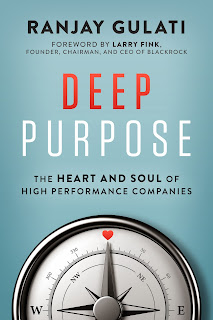
How To Lead With Deep Purpose

Having conducted extensive field research, Ranjay Gulati, author of the book, Deep Purpose, The Heart and Soul of High-Performance Companies, reveals the fatal mistakes leaders unwittingly make when attempting to implement a reason for being. 

“My interviews with well over 200 executives across 18 firms revealed the secrets of these companies—not the usual facile frameworks, but new ways of thinking about business that allow leaders and companies to operate with heightened passion, urgency, and clarity,” shares Gulati. “I call this, deep purpose.”


Furthermore, Gulati explains that most leaders think of purpose functionally or instrumentally, regarding it as a tool they can wield. On the other hand, deep purpose leaders think of it as something more fundamental; an existential statement that expresses the firm’s very reason for being. These leaders project it faithfully out onto the world.


“Rethinking the nature of purpose should prompt you in turn to re-imagine your role as a leader,” says Gulati.


As you read the book, you’ll also discover that most leaders pursue purpose superficially because they don’t fully understand how devotion to a purpose enhances business performance. In contrast, deep purpose leaders grasp more acutely the mechanisms by which purpose galvanizes organizations and generates outsized performance.
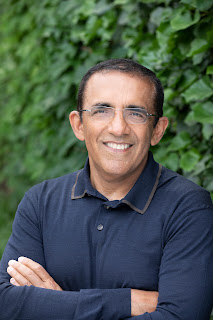
 

 Ranjay Gulati


Gulati shares these additional insights with us:


Question: Why did you decide to write this book—and why is its message so important right now?


Gulati: Efforts to tackle pressing problems such as climate change and inequality have stalled, leaving society at a crossroads. In this context, advocates of corporate purpose have lauded it as a silver bullet, while cynics regard it as a cloak behind which companies can hide their true selfish intentions. In reality, some companies have indeed used the idea of “purpose” to mask nefarious conduct. Others, however, have pursued purpose in more authentic ways. By assessing companies that truly embrace purpose as an organizing principle, I hope to showcase how the vast majority of businesses today might better employ purpose to serve society while also achieving economic success. 


Question: You talk about how purpose can actually help to boost company performance. How?


Gulati: A key insight in my book is that purpose is not a tax on business. Rather it is a generative force that allows the enterprise to simultaneously perform better on its commercial and social objectives. But purpose only becomes generative when companies pursue it deeply and view it as something very fundamental to their being. In that case, the organization becomes transformed from one in which employees and other stakeholders connect with it in a transactional way into one in which they feel personally committed to the organization and its objectives. A number of studies have suggested a correlation between purpose and long-term performance (as measured by total shareholder return, growth, and achievement of measurable social objectives). But few have tried to pin down the specific levers by which this performance materializes. My in-depth fieldwork allowed me to identify the specific levers by which the pursuit of deep purpose translates into superior financial and social performance.


Question: What are the levers of deep purpose?


Gulati: Four specific levers allow deep-purpose companies to achieve superior results. These are: 

  • Motivational: attract and retain a more motivated and inspired workforce.
  • Directional: greater clarity on strategic choices and direction.
  • Reputational: greater recognition as a trusted and reliable brand that in turn elicits greater customer loyalty.
  • Relational: enriched connections with suppliers, partners, and others their ecosystem around a shared understanding of each other that is shaped by clarity of purpose. 

Question: How does purpose create trust, autonomy and collaboration?


Gulati: As Satya Nadella told me, “Writing a purpose statement is easy, what comes next is much harder.” The bulk of my book is devoted to exploring how deep purpose companies make purpose an integral part of their organization. I looked carefully at how such firms modify their organizational architecture to allow themselves to operate with purpose. I found that deep purpose companies are extremely attentive to their culture and bring it into close alignment with their purpose. Culture is the translation of purpose into a set of behavioral anchors and principles by which the firm operates.


There are some common themes in the cultures of deep purpose companies. First, they encourage individuals to discover and live their personal purposes. They also provide guidance and support that helps individuals connect their personal purpose with that of the organization. Second, instead of attempting to shackle or control behavior, these cultures tend to encourage autonomy and individual expression. Together, these shifts help transform the connection between employees and the organization into one of trust and commitment rather than transactions and contracts.


Question: What are the skills leaders need to develop in order to lead purposefully?


Gulati: Leaders must function as both “plumbers” and “poets.” Plumbers assess market conditions, set strategies, and focus on outstanding execution. Poets inspire people around a shared purpose. If you lack a purpose, you must first find one, plumbing the depths of your heritage for inspiration. Then you must disseminate it, in part by crafting a big story about who you are, what your firm is about, and what it is there to do. Beyond storytelling you must ensure that all of your corporate systems, structures, and processes align with your purpose. And ultimately, you must embody the purpose. Your actions and words must mirror and echo your organizational purpose. In many ways, leaders expect more of themselves when they purport to lead deep purpose organizations.


Question: What advice would you give young leaders just starting out?


Gulati: The rising generation of young leaders is more purposeful in their lives than prior generations and cares deeply not just about the bottom line but fulfilling an organizational purpose. A range of fast-growth startups operating today didn’t launch with big ideas only, but also with big ideals. As I’ve written in a recent HBR, “Startups typically operate with the mentality that growth and profit come first, higher calling comes second. This strategy, however, is misguided. Increasingly, entrepreneurs are imbuing their ventures with a grand ideal in addition to a great idea. This ideal not only serves as a moral purpose but also has three strategic and operational advantages. First, it can help expand entrepreneurial ambition. Second, it can attract fellow travelers. And third, it can help align a winning team.” 


And if you are not necessarily part of a start-up and early in your career, think hard about your own life purpose and use it as a filter to make important life decisions including where you might want to work. You will find that you perform best in purposeful organizations where its purpose is resonant with your own purpose.


Thank you to the book’s publisher for sending me an advance copy of the book.

Comments

Popular posts from this blog

Six-pillar Roadmap For How To Move From Merely Surviving To Truly Mattering

  In the new book, The Mattering Effect: Creating A Life Of Meaning And Worth , podcaster and author John R. Miles reframes today’s most common struggles and empowers individuals and institutions alike to break bad habits and reclaim a sense of worth and belonging. “Organizations have spent the last decade chasing 'engagement' and 'psychological safety,' yet global productivity is stalling and 60% of employees report they do not feel valued in the places where they spend their days,” shares Miles.   He calls this “The Great Erasure”—a condition where high-achievers become highly visible to the organization while becoming invisible to themselves.   In addition, Miles argues that many of today’s most common struggles—burnout, anxiety, loneliness, and disengagement—are not personal failures or mindset problems. They are the result of unmattering: the gradual erosion of felt significance within modern systems that reward performance while overlooking presence.   Fortu...

Seven Ways To Be A Collaborative Leader

Edward M. Marshall 's book,  Transforming The Way We Work -- The Power Of The Collaborative Workplace , remains relevant today, more than a decade after Marshall wrote it. Particularly useful is the book's section that teaches readers how to be a collaborative leader. Marshall says that there are  seven different, important roles and responsibilities of collaborative leaders when leading teams , and those leaders should select the appropriate style to meet the team's needs. The seven roles are : The leader as sponsor  -- You provide strategic direction, boundaries and coaching for the team. You also monitor progress and ensure integrity in the team's operating processes. The leader as facilitator  -- You ensure that meetings, team dynamics, and interpersonal relationships function effectively. You also ensure internal coordination of activities among team members. The leader as coach  -- You provide support and guidance and you serve as a sounding board. The lea...

Questions You'll Likely Be Asked At Your Next Job Interview

Many Human Resource (HR) managers have moved away from questions like "What's your weakness?" and prefer  behavior-based questions , which ask you to: describe how you handled specific situations  at your former jobs If you are about to interview for your next leadership position, be prepared for questions like these (from an article in  Reader's Digest ): Tell me about a time when your integrity was challenged . What was the situation, and what did you do? Tell me about a time you had to work with someone you did not personally like . If you could come to work with  only three tools to get your job done, what would they be ? What personal and professional development have you been engaged in outside the workplace  over the past year? Describe your Outlook calendar  on a typical day

More Leadership Quotes From John C. Maxwell

The real gems in John C. Maxwell's book,  Everyone Communicates Few Connect , book are the abundant leadership and communication quotes, such as these: To add value to others, one must first value others. People may hear your words, but they feel your attitude. All good communicators get to the point before their listeners start asking, "What's the point?" The first time you say something, it's heard. The second time, it's recognized, and the third time it's learned. In the end, people are persuaded not by what we say, but by what they understand. People pay attention when something that is said connects with something they greatly desire. Maxwell also says that: Management is about persuading people to do things they do not want to do, while leadership is about inspiring people to do things they never thought they could . The book covers five principles and five practices to help readers so they can connect one-on-one, in a group, or...

High-Performing Teams Are Made Of This

According to Ron Ricci and Carl Wiese, authors of the book,  The Collaboration Imperative , high-performing teams have the following characteristics: People have solid and deep trust in each other and in the team's purpose--they feel free to express feelings and ideas. Everybody is working toward the same goals. Team members are clear on how to work together and how to accomplish tasks. Everyone understands both team and individual performance goals and knows what is expected. Team members actively diffuse tension and friction in a relaxed and informal atmosphere. The team engages in extensive discussion, and everyone gets a chance to contribute--even the introverts. Disagreement is viewed as a good thing and conflicts are managed.  Criticism is constructive and is oriented toward problem solving and removing obstacles. The team makes decisions when there is natural agreement--in the cases where agreement is elusive, a decision is made by the team lead or executiv...

Decide

Many years ago, I worked with a person who could not make decisions.  Neither big nor small decisions. That indecisiveness paralyzed our business in many ways. Unfortunately, the book, Decide:  Work Smarter, Reduce Your Stress, and Lead by Example , had not been published.  Had it, I would have shared it with my co-worker. Decide , published this past February, teaches readers how to make better decisions based on the real results they want to experience. The author, Steve McClatchy, explains how to use the two forms of human motivation -- Gain, or Prevent Pain , to make more effective decisions.  For example, he demonstrates how inserting a Gain task in the middle of a Prevent Pain day can give you the energy you need to move forward and make the Prevent Pain tasks take less time through motivation. Deeper into the book, you'll be reminded about not only the problems with procrastination, but also about the benefits of procrastination, and, if you are ...

5 Compelling Benefits Of Having An Ethical Culture

In  Andrew Leigh's  book,  Ethical Leadership , he provides these compelling and important benefits of having an  ethical culture  in your business/organization: Customers prefer dealing with companies who put ethics at the center of their culture. Most employees would prefer to earn less working for an ethical company than being paid more and working for an unethical company. More than one in three people at work say they've left a job because they've disagreed with the company's ethical standards ( Trevino, L and Nelson, K - 2011 ) If you adopt an early warning system against misconduct it reduces the risk of you facing expensive litigation. An ethical culture helps you make your company a strong affirming place to work in. "The foundations of an ethical culture include values, attitudes, meaning, behaviors, purpose, and management practices," explains Leigh.

Make It Easy For Your Employees To Volunteer

Start planning now for this year's National Volunteer Week, April 15-21 . That's the week when nonprofit organizations throughout the U.S. will celebrate and honor their volunteers. If you are not already volunteering, what a great time to start. Make a commitment to yourself to start volunteering before that week starts! And, if you are a workplace leader who supports a volunteer program at your business, you already know that by encouraging employees to give back to your community you are: building teamwork motivating employees attracting new hires In fact, job seekers much prefer companies that have a strong volunteer program. And, a growing number of businesses are rewarding employees who volunteer by giving them extra vacation time and other incentives. Fortunately, throughout the U.S. there are hundreds of volunteer opportunities where employees can contribute individually, or where leaders can organize teams of employees to volunteer together on a routin...

Good Coach Versus Bad Coach

Former Verizon Wireless CEO,  Denny F. Strigl  offers these tips for how to be a good coach to an employee.  He explains that  good coaches help performers by : Keeping them focused. Giving them objective, helpful feedback. Acting as a sounding board for new approaches. Identifying blind spots that may be holding the performer back. Reinforcing key values, principles, and behaviors that improve performance. Recognizing positive behavior and performance. Providing encouragement after setbacks and failures Setting "stretch" goals. Acting as an accountability partner. Strigl believes that  some managers fail in their coaching roles because they : View coaching as babysitting. See coaching as only correcting performance. Don't spend enough time with their employees. Are reluctant to criticize. Have social relationships with their employees. Have a "sink-or-swim" philosophy. Believe coaching is not helpful or meaningful. "Coaching may...

How Will The Value Of Your Days Be Measured?

I recommend that all leaders every so often read the  What Will Matter  poem by  Michael Josephson . It serves as a powerful reminder of the importance of unselfishly serving and leading with character. I've highlighted in bold and in color my favorite parts of the poem: Ready or not, some day it will all come to an end. There will be no more sunrises, no minutes, hours or days. All the things you collected, whether treasured or forgotten, will pass to someone else. Your wealth, fame and temporal power will shrivel to irrelevance. It will not matter what you owned or what you were owed. Your grudges, resentments, frustrations and jealousies will finally disappear. So too, your hopes, ambitions, plans and to-do lists will expire. The wins and losses that once seemed so important will fade away. It won't matter where you came from or what side of the tracks you lived on at the end. It won't matter whether you were beautiful or brillian...